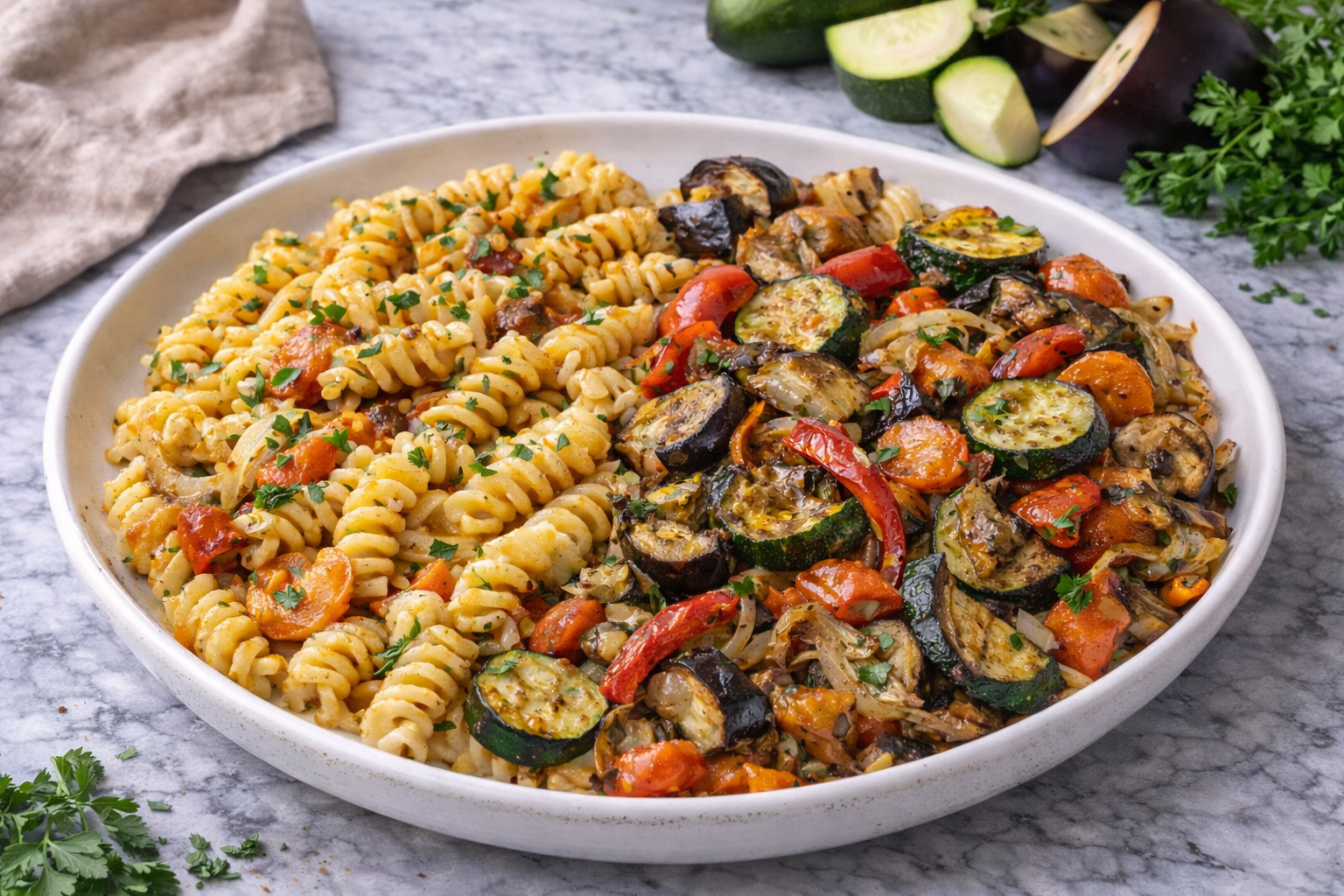
Pasta with grilled Italian vegetables
A simple and practical guide on how to prepare pasta properly and effortlessly, while making a larger batch of vegetables at the same time for multiple meals.
Portsjone: 20
Koostisosad
Pasta:
- 1 kg fussili pasta
- ~5 l water
- Salt
Köögiviljad:
- 500 g white onion
- 700 g zukkini
- 500 g eggplant
- 900 g carrot
- 500 g red bell pepper
- 30 g olive oil
- ~10 g fresh rosmary (remove the woody/strong parts)
- ~10 g fresh thyme (remove the woody/strong parts)
- 1,5 tbl dried oregano
- 1 tbl dried garlic powder
- Salt/(white) pepper
- If desired, you can also use other vegetables (for example tomatoes, different types of peppers, or mushrooms).
Juhised
Boiling pasta:
- Typical water rule: ~1 liter of water per 100 g of pasta. I personally use 1 liter per 200 g because I don’t have such a large pot.However, keep in mind: the water may cool down too much, which can increase the cooking time; it may become too starchy (if you use the same cooking water for the sauce, that’s actually a good thing); and the pasta may stick together. I recommend using more water and stirring a bit more frequently.
- Salt rule: Add 10–12 g of salt per 1 liter of water. For 5 liters of water = about 50–60 g of salt. The result should be water that tastes like the sea, so the pasta gets seasoned from the inside as well.
- Pasta cooking rule: always cook the pasta according to the package instructions. For meal prep, cook it 1–2 minutes less so it stays slightly al dente (a bit firmer). Firmer pasta is also healthier, as Your body digests it more slowly, which helps prevent rapid blood sugar spikes — so always aim for al dente.
- Draining: always drain the pasta immediately and serve it right away, or if needed, cool it quickly with cold water and drain it again immediately. If possible, spread the pasta out in a larger GN tray or container so it can cool down evenly.PS! Pasta and other starchy foods (such as rice or potatoes) that have been cooled for at least ~12 hours undergo a structural change in their starch. Part of the starch turns into resistant starch, which digests more slowly and partially acts like fiber. Cooling can be done either in the refrigerator or in the freezer.
Grilled vegetables:
- Chop evenly. Cut everything into pieces of similar size. Harder vegetables (e.g., carrots) slightly smaller. Softer ones (zucchini, peppers) slightly larger. This way everything cooks evenly.
- Add oil moderately. About 10–15 ml of oil per 1 kg. For 3 kg, 30–40 ml. The vegetables should have a light sheen, but not be swimming in oil.
- Season with salt in balance. Add less at first — you can always add more later if needed. Focus on highlighting the natural flavors of the vegetables.
- To bring in more Italian flavor, remove the tough woody stems from the center of the rosemary and thyme, then chop them finely. Add dried oregano, garlic powder, and white pepper for seasoning (it doesn’t stand out visually in the dish — but you can also use black pepper).
- Spread in a single layer. Do not overcrowd the pan or baking tray. The vegetables must be in one layer. Use multiple trays if necessary. Otherwise, they will start steaming instead of roasting.
- Roast at a high temperature. 200–220°C (if possible, use the oven’s crisp or grill function). About 25–35 minutes. Stir 1–2 times during cooking. High heat gives better caramelization and deeper flavor.
Tegemist on keskmise toitumisalase teabega - mis võib muutuda vastavalt toorainest, valmistusviisist, jne.
Kui armastasid seda retsepti, siis jaga ka oma meistriteose pilti sotsiaalmeedias, et ka mina seda näeksin! Või lisa pilt meie FB gruppi!Maini ära @rauno.oolberg, lisa tägid #rotaste, #sestmaitseloeb